Teaching Preschool Math to Autistic Children: Strategies for Success
Updated: Sep 25, 2024
With autistic learners, foundational skills like useful speech and life skills take priority before math. But math can still be introduced in meaningful ways when the child is ready.
Use Visuals, Sensory and Hands-On Activities
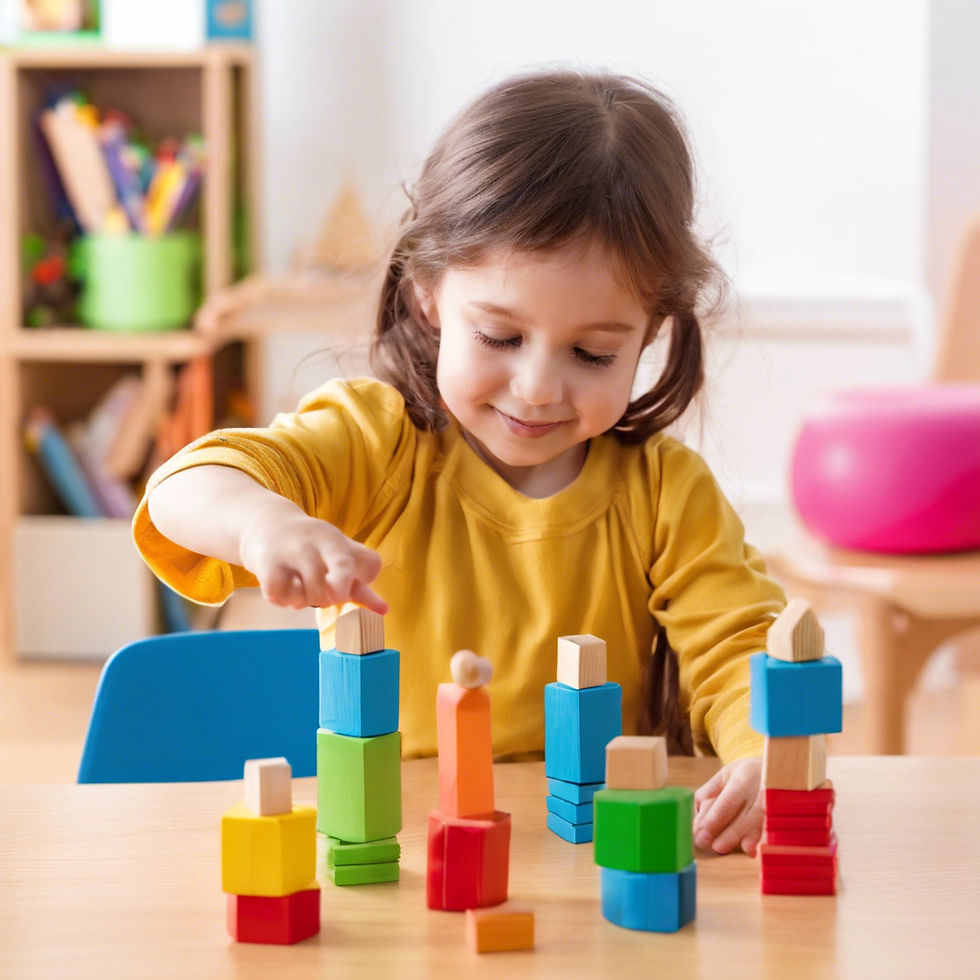
Autistic children, like other preschool-aged children, often respond well to visual supports and hands-on learning. Use objects like counting blocks, shapes, or toys to make abstract math concepts more concrete. For example, counting with real objects or creating patterns with colorful blocks helps children visually process information.
2. Incorporate Special Interests
Many children on the autism spectrum have specific interests, like trains, animals, or certain types of toys. Incorporating these into math lessons can make learning more engaging. For example, counting toy cars or sorting animal figures by color or size can help reinforce math concepts like counting and categorization.
3. Utilize Predictable Routines to Teach Math
Children with autism thrive on routine, and predictable learning structures can ease anxiety and support focus. You can establish a math routine where certain activities are repeated regularly, such as implementing the use of a calendar in the morning, daily counting song, a math activity like sorting objects by size or color, or matching shapes. This repetition reinforces learning.
4. If the child is a Gestalt Language Processor, don’t break math into smaller steps.
It may seem natural to break math activities into smaller, manageable steps to avoid overwhelming your child. This may be helpful for some children, but if your child is a Gestalt Language Processor they may prefer to look at the task as a whole and be frustrated when fed the information in steps. For example, if you're teaching addition, if you tell them to build the first number, then build the second number, then connect them, they may see these as separate events because of the way it was broken down and not want to find the total. Instead, introduce it as one event “you have 2 cars plus 3 blue cars, how many cars do you have in total?”
5. Use Technology and Apps
There are many apps designed that help teach math in a fun and interactive way. These tools can provide instant feedback and keep your child engaged, especially if they enjoy technology.
6. Be Patient and Celebrate Progress
Every child learns at their own pace, and it's important to be patient and supportive. Celebrate even the smallest victories, as they build confidence and motivation for learning.
7. Don’t over-emphasize symbolic representations, unless the child is interested in it.
Symbolic representations include the written numerals and symbols (plus/minus). Some children with hypernumeracy may enjoy games and activities that involve the written number. However, concepts are a bigger priority, particularly in children this young.
By incorporating visual aids, routines, and your child’s interests, you can create a math learning experience that is both enjoyable and effective for preschoolers on the autism spectrum.


Comments